Somebody Please Tell Me What Products I Actually Need
Somewhere between my postpartum scalp freakout and my third Google search about whether I should be exfoliating or not, I had a realization: women's wellness doesn't have an information problem — it has the opposite problem. There's so much information, from so many directions, with so many conflicting opinions, that by the time you've read enough to feel confident, you've also read enough to feel confused again. Congratulations, you're back at square one, but now you know what "moisture-protein balance" means.
Take haircare: I never thought much about it until my hair started shedding postpartum, and suddenly I was deep in Reddit threads about scalp pH, protein overload, and whether silicones are the enemy or just misunderstood. Every answer led to three more questions. Is this shampoo non-comedogenic, because I also have acne-prone skin and apparently that's a whole separate consideration nobody mentioned? Is my stylist recommending this because it's right for my hair, or because it's what's sitting behind her desk?
Skincare is somehow worse. Should I be exfoliating? With what? How often? Is my barrier compromised or am I fine? Every influencer has an answer and also (conveniently) an affiliate link. Nearly half of Americans say social media has influenced them to spend more on beauty products than they otherwise would, with millennials averaging $2,670 a year on beauty — which makes sense, because the information is designed to make you feel like you're always one product away from having it figured out.
And yet, every time I actually make it to the dermatologist, they tell me CeraVe is fine and I'm doing great. I believe them. And then I open Instagram.
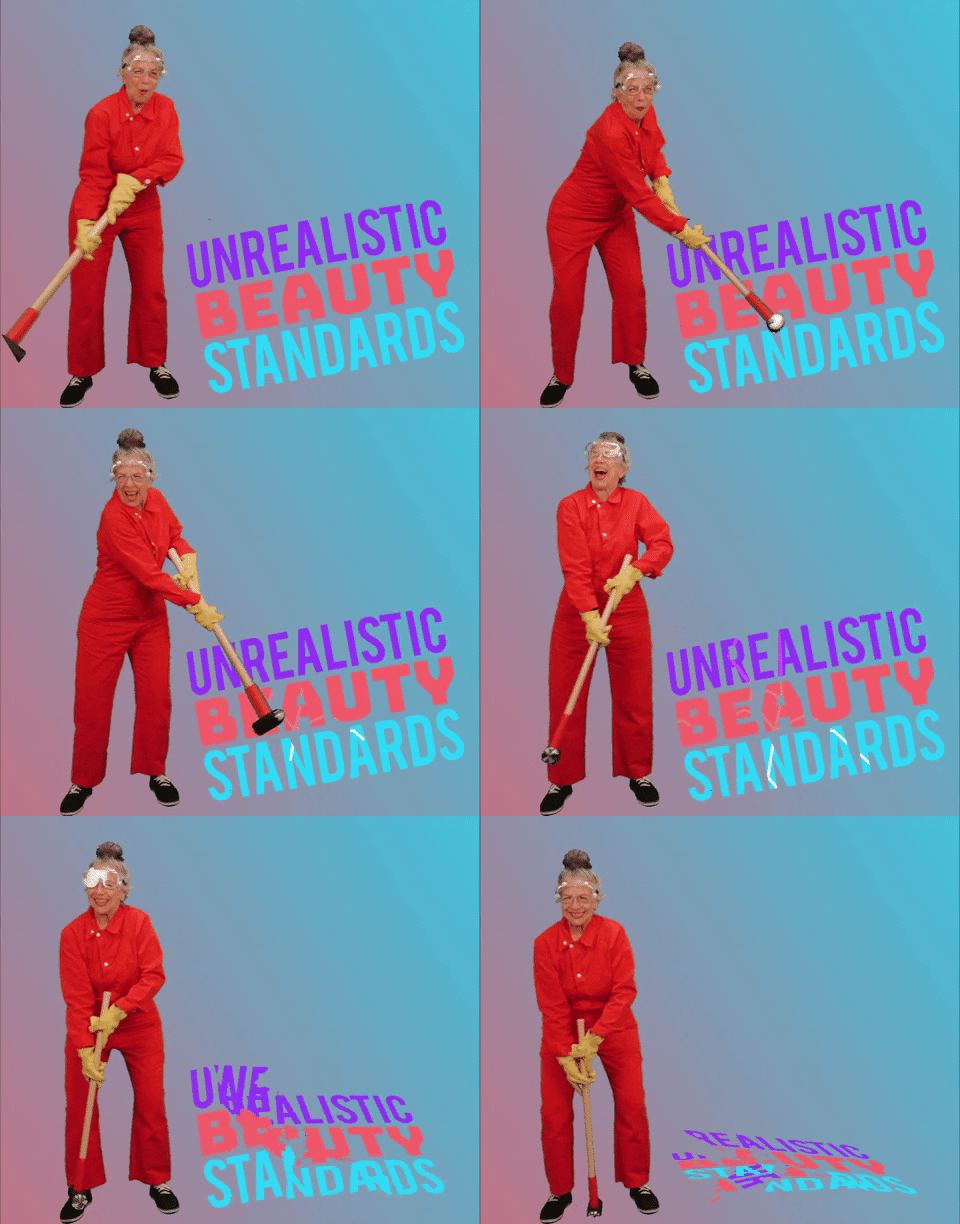
I don't think this is accidental. Women's beauty and wellness spaces have always monetized confusion. The more overwhelmed you are, the more you buy, and the more you buy, the more overwhelmed you get. It's a very elegant trap, and I say that as someone who is absolutely still in it. Godspeed, my friends.


More from GIRLHOOD