Is the Body Positivity Movement Officially Dead?
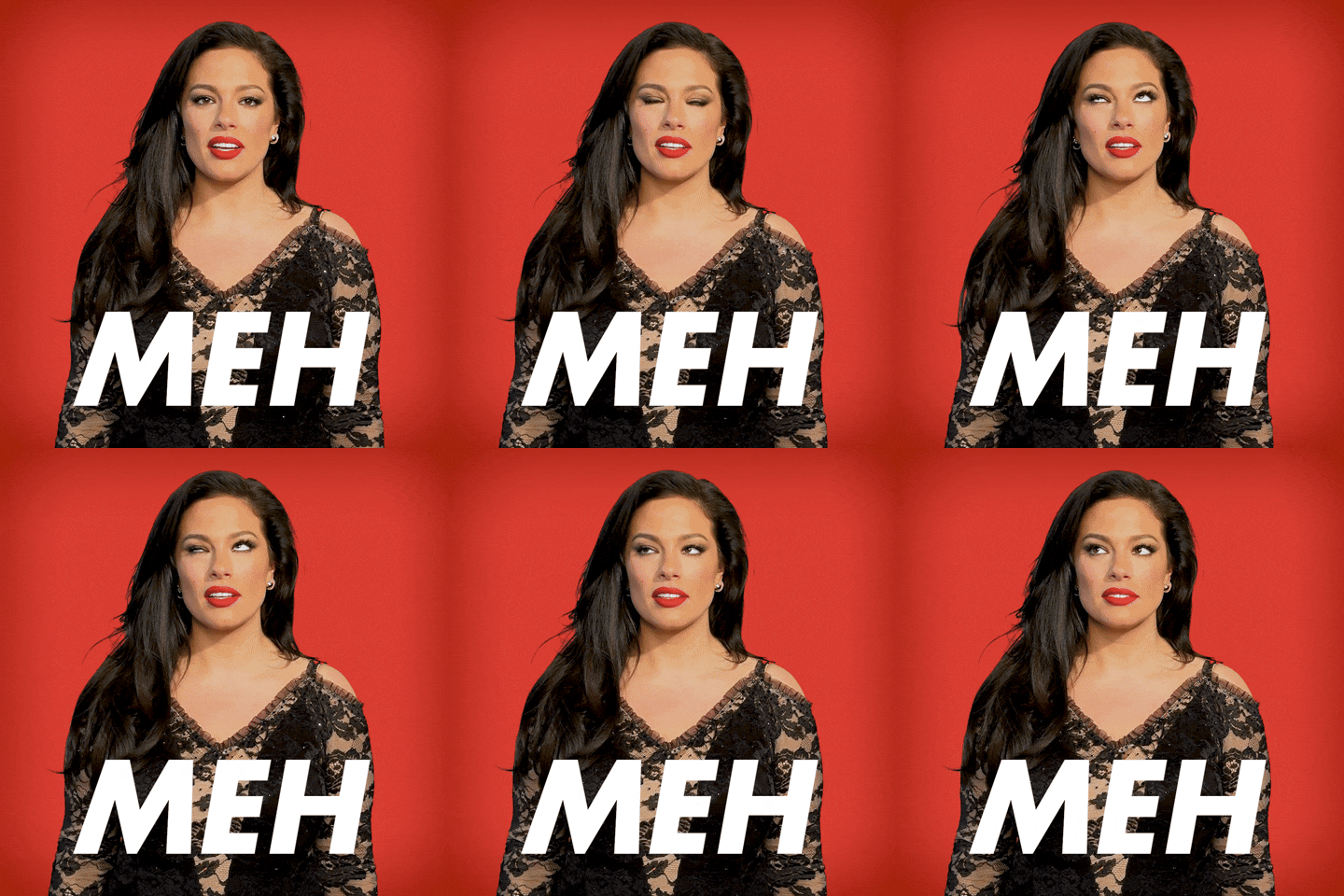
When I heard Ashley Graham’s recent comments about the effect Ozempic and other GLP-1 drugs have had on the body positivity movement, I wasn’t surprised at all. In fact, my first instinct was to agree with her.
“It’s really disheartening,” Graham said during a Marie Claire interview. “There was a pendulum that swung that was so body acceptance, positivity, everybody be who they want to be. And now it's going back this whole opposite way that feels like a smack in the face to the women who have felt like they've had a voice.”
She’s not wrong. We worked really hard to put more inclusive ideas and language in place. We banished phrases like “nothing tastes as good as skinny feels” and stopped moralizing food and rewired our ideas about exercise as punishment for “being bad”.
Unfortunately, the moment of body positivity was so short-lived, I wonder if it was even fully cemented at all. Look how easy it was to reverse so much of that progress. It’s like the moment a “solution” presented itself, the culture at large just said “yeah, you know what? I’m tired of pretending to embrace all body types, I just want to go back to glorifying the really thin ones.”
What is so hard to dissect about all this is the fact that GLP-1 drugs are not the enemy. For so many people, they are life changing medications, drugs that help them manage a range of conditions and allow them to feel more like themselves. What’s worth criticizing, though, is the fact that people are turning to these drugs exclusively for the purpose of becoming very, very thin. GLP-1 drugs are medications, not "the easy way out", yet they're being treated as such.
Women in the public eye are shrinking, which leads other women (and, more importantly, young girls) to only see one standard of beauty once again. And then there’s the rise of diet culture and fatphobic language, which is making a real comeback alongside the GLP-1 boom.
Graham is right: We are seeing less and less representation of a range of body types. And yes. That’s concerning. Because every body or every size and shape deserves to be included in the conversation…and to see themselves reflected and celebrated.


More from BODYTALK

"Protect Your Daughters" Has Never Been Enough. Why Aren't We Talking More About Educating Our Sons?