With conversations concerning our bodies, awkwardness is the name of the game — or so we’ve been told.
Since forever, it seems, women have been taught to feel uncomfortable in their bodies, particularly as their first period approaches. A completely natural biological process has too often been wrapped in secrecy, shame, or hushed warnings, turning what could be an empowering milestone into something embarrassing.
But it doesn’t have to be this way.
The way we talk to our daughters about their periods has the power to interrupt those old narratives and replace them with something healthier, more honest, and more affirming.
With that in mind, we’ve created a guide you can follow (and adapt!) to help inform, prepare, and support your daughter as she approaches her monthly cycle.
When should you start talking about periods?
Just as there is no one way to address your daughter’s period, there is no “right” time to do so either.
According to the American College of Obstetricians & Gynecologists (ACOG), most girls in the U.S. start their period between the ages of 12 and 14, but some start earlier or later.
This is why talking to your daughter about her cycle before puberty hits (think: between the ages of 8 and 9) is ideal, because she’ll be well-prepared when her first menstrual cycle arrives.
Prepping your daughter for her period may require a follow-up conversation (or two!), and that’s okay. In fact, an ongoing dialogue, composed of early, casual conversations, is often more effective than a single sit-down, as you’re normalizing the discussion of her body and sexual health.
Signs your daughter is about to start her period
Because puberty is, well, A LOT, you’ll likely notice both physical and emotional changes in your daughter as her first cycle approaches.
Menstruation typically starts about 2 to 3 years after the breasts start developing, per ACOG. Other physical changes may include the appearance of pubic hair, growth spurts, and changes in body odor. Emotional shifts can look like unpredictable moods and increased sensitivity to others.
Monitoring this transition in your daughter will better guide the timing of your conversation and ensure she is as ready as she can be for her first period.
How to talk to your daughter about periods (without the cringe)
Provide your daughter with a comprehensive understanding of her body, keeping in mind that “comprehensive” may look a bit different for everyone, and that’s okay. If in need of a refresher yourself, consider consulting a book or two. I’d recommend We Need To Talk About Vaginas and The Care and Keeping of You (an American Girl classic!).
Should you choose not to go the route of "menstruation is the shedding of your uterine lining” (no worries, one step at a time), pediatricians continue to advise that medical language is used, such as “vagina,” “uterus,” and “menstruation.”
Here’s an approach that is both clear and concise:
"Your period is a monthly cycle during which you bleed from your vagina and often lasts about a week. Young women typically get their periods between the ages of 9 and 14, or a year or two into puberty."
If she’s not too overwhelmed, consider addressing a few of her fears head-on, for example:
“Will it hurt?”
"You may feel uncomfortable and tired when on your period, but your menstrual cycle is indicative of a healthy, well-functioning body. Of course, if the cramping in your lower belly (uterus) is too much, you can apply a heating pad, rest, and take pain medication as needed — seeking relief is not a weakness."
“Will everyone know?”
"No! Unless you choose to share with others that you’ve started your period, your menstrual cycle is between you and your body."
Making it a family conversation
Consider, if applicable, inviting the men in your household to take part in the conversation, too!
It may feel uncomfortable, initially, including fathers and sons, if old enough, in a bit of a female-forward conversation. However, including those traditionally removed from the conversation further destigmatizes women’s health and provides your daughter (and you!) with the support she deserves.
Let her lead with questions
Have your daughter ask questions as they arise. There are a few parts of the conversation that should be prioritized (i.e., what is a period?); otherwise, answering your daughter’s questions at her pace lessens the pressure of getting the entire spiel out in one go and encourages open communication.
You may not have every answer, but you can remind her that you are always, always a resource, and the two of you will figure it out together.
Your daughter's first period: What to do when it happens
Let’s game plan! Your daughter’s first period has arrived. What do you do?
-
She may be feeling overwhelmed (understandable!), so remain calm and supportive when talking about next steps.
-
Remind your daughter that every first period looks a bit different. Clotting and spotting are both normal, as is a shorter flow.
-
It may be beneficial to discuss cycle tracking as well, even if her first few periods are a bit unpredictable. Whether logged in an app or trusty planner, tracking her period will alleviate some of the anxiety from her monthly cycle.
-
Be sure to check in after her first few periods, just to make sure everything’s alright!
Building your daughter's first period kit together
Though I don’t recall much of the conversation my mother and I had — so much had gone over my head at twelve — she’d given me a period kit post-talk to keep in my locker at school. Within the paisley-printed box, she packed the essentials: pads, tampons, and Midol.
Creating a kit for your daughter is a practical means of supporting your daughter as her period approaches. Though creating a kit together would alleviate anxiety, too, and may be the perfect moment to demonstrate pad application, if needed!
Or, encourage your daughter to build (and share) kits with her friends, normalizing periods within her community one period kit at a time!
What to include in a period kit for your daughter
When prepping your daughter’s period kit, I’d recommend including at least one item from each category:
-
The essentials: pads (of various sizes), panty liners, and period underwear
-
Comfort items: pain medication, a heating pad alternative, spare underwear
-
The backup: wipes, hand sanitizer, and stain remover pen
As for choosing the kit itself, your daughter may prefer a container that is both discreet and accessible (not a paisley-printed box), though you might consider adding a personal detail to make it more “her.”
Size is more dependent on where she’d like to store it. Because I'm a bit forgetful and often anxious (a horrible combination), I kept two kits: one in my locker and another in my backpack.
Facts about menstruation every girl should know
Unfortunately, the discourse concerning periods outside of the household is often riddled with half-truths and misconceptions.
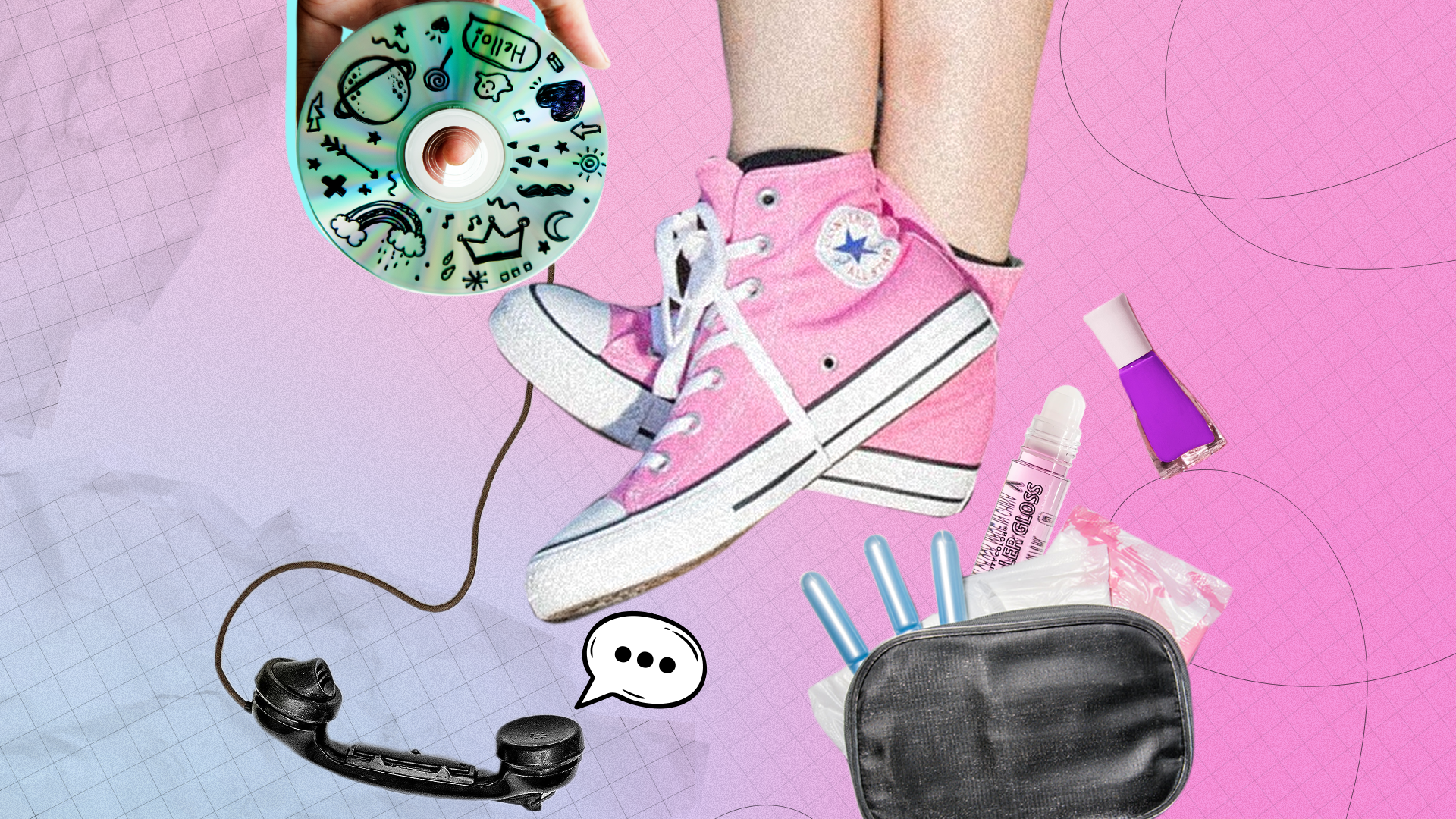

To best dispel any questions or concerns your daughter may have about her period, we’ve gathered a few facts about menstruation she should know:
-
Your menstrual cycle, on average, is between 21 and 35 days.
-
Your period, a phase within your menstrual cycle, is between 3 and 7 days.
-
Normal amount of blood loss seems like more than it actually is!
-
Premenstrual syndrome (PMS) is both real and manageable and often occurs a week or two before your period. Symptoms may include tiredness, irritability, and tender breasts.
-
Periods, largely due to hormonal fluctuations, may affect mood, energy, and physical comfort — but, if your period symptoms are, at all, disruptive or unmanageable, you may want to consult a doctor.
-
Similarly, irregular periods (heavier flows, longer flows, and shorter cycles) may be symptomatic of PCOS, endometriosis, or another menstrual condition, and medical advice may be needed.
For a full list of frequently asked questions, ACOG's "Your First Period" page is a wonderful resource.
Navigating period talk in the digital age
I'd also make a slight note, though tweak as needed, regarding the perception of periods and female bodies online. (When I’d first gotten my period, I was not on social media, but I realize times are a-changing.)
The digital space can foster community and inclusivity, but our feeds can just as easily create echo chambers and distort our perception of the “normal” body. Or, convince users that a “normal” body exists.
Remind your daughter that every body is different and what she may consume online should be taken with a grain of salt. And, if any questions arise, encourage her to come to you.
You've got this (and so does she)
Ultimately, you know your daughter best. Trust your instincts, and know that imperfect conversations are just as valuable as those that occur without a stumble or two.
Remember, you're providing your daughter with the resources to both understand and advocate for her body, and honesty means more than having all the answers.
To that end, Rescripted is here, always, if you and your daughter are ever in need of a bit more care and community!