Many women undergoing fertility treatments are likely already familiar with Clomid. It’s a medication prescribed to help females ovulate, which in turn can increase the chances of becoming pregnant.
But did you know that men can take Clomid as well? The drug is sometimes used as a treatment for low testosterone (low T), a condition where the testicles don’t produce enough of the male sex hormone. Low T symptoms include a reduced sex drive, erectile dysfunction, loss of armpit and pubic hair, shrinking testicles, and hot flashes. This condition can also have an impact on a couple’s attempts to conceive: “Low testosterone levels can affect a man’s fertility by decreasing sperm production and quality,” explains David Shusterman, M.D., a urologist and the Medical Director at NY Urology in New York City. Clomid, therefore, “works by boosting the body’s testosterone production,” says Dr. Shusterman. “For men wanting to start a family, Clomid can improve sperm production and quality, increasing the chances of conceiving.”
Although Clomid is a common fertility drug for women, “it is often the go-to treatment for patients with low testosterone, an abnormal semen analysis, and who are having difficulty conceiving,” says Jessica Boone, MPA, PA-C, infertility Physician Assistant, and owner of Fortitude Fertility Consulting.
So let’s break down how Clomid works for low testosterone in men, how long it takes to work, what typical dosing looks like, and how it can support a couple’s chances of conceiving.
Can men take Clomid for low testosterone?
The short answer is yes, but there are several caveats:
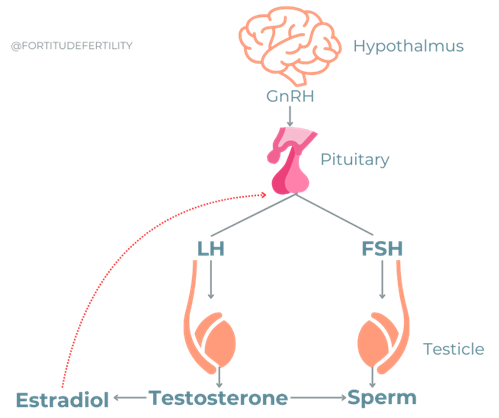
Clomid “can help boost testosterone levels by stimulating the pituitary gland to release more luteinizing hormone (LH) and follicle-stimulating hormone (FSH), which in turn leads to increased testosterone production,” says Dr. Shusterman. But he also warns that prescribing Clomid for low testosterone in men “is not officially approved by the Food and Drug Administration (FDA).” The drug is usually prescribed off-label in these cases.
“[Clomid] is typically not the first choice by many providers,” says Boone. This is because the medication “relies on the internal production of testosterone, which can take time as everyone responds differently to the medication, and fine adjustments of the medication are needed to find the right dose to help with the low T symptoms.” She goes on to say that Clomid on its own is not always enough to treat low testosterone, either.
How long to take Clomid for low testosterone
One of the most common questions patients ask is how long Clomid needs to be taken to support healthy testosterone levels and fertility goals. There is no single universal timeline, but most providers follow similar patterns based on clinical guidelines and available research.
Clomid is typically taken for several months because hormonal systems take time to respond. According to a review by Harvard Health Publishing, testosterone levels can rise within 4 to 6 weeks, but many patients benefit from continuing the medication for 3 to 6 months while providers monitor hormone levels, symptoms, and semen parameters. Boone explains that regular lab work helps confirm the dose is supporting testosterone production without causing unwanted side effects, such as excessive estradiol levels.
How long does Clomid take to work for low testosterone?
Most men begin to see measurable increases in testosterone levels within 4 to 6 weeks. A 2022 review in The World Journal of Men’s Health reports that testosterone can rise significantly during the first month and continue increasing over the following weeks.
However, the timeline for symptoms can vary. Improvements in libido, energy, and mood may appear within 4 to 8 weeks. Improvements in semen analysis often take longer because sperm need approximately 70 to 90 days to develop (and an average of 74 days, according to Fertility & Sterility reports from 2021). Many providers tell patients to expect 3 to 4 months before seeing improvements in sperm concentration or motility.
If there’s no response after 3 months, providers may adjust the dose or consider adding hCG, which has shown some to help in some cases, according to a 2021 study in Research and Reports in Urology. A lack of improvement after dose adjustments can signal that the testicles are not responding, which may require discussing alternative treatments.
One important note. Stopping Clomid too soon can cause testosterone levels to fall again, potentially falling lower than they were before treatment, as suggested by research in International Braz j Urol from 2016. Providers often recommend tapering or switching to another medication if long-term Clomid use is not appropriate.
Clomid dosing for low testosterone
There’s no single dose that fits every patient. Providers base dosing on symptoms, baseline hormone levels, and fertility goals.
Typical dosing for men often ranges between 25 mg and 50 mg, taken every day or every other day. Some clinicians prefer starting with 25 mg every other day, then increasing to 25 mg daily or 50 mg three times per week if testosterone levels do not rise sufficiently. Others use a daily 50 mg dose from the beginning for patients with significantly suppressed testosterone.
The goal is not to push testosterone to artificially high levels. The aim is to help the body restore a healthy hormonal balance at a pace that supports fertility and symptom relief. This is why ongoing blood work is essential. Providers often test LH (luteinizing hormone), FSH (follicle-stimulating hormone), estradiol, testosterone, and SHBG (sex hormone-binding globulin) at regular intervals.
It is also common for clinicians to monitor semen parameters while on Clomid, especially for couples who are actively trying to conceive. Improvements in semen volume, concentration, motility, and morphology often align with increases in LH and FSH.
Clomid for low testosterone treatment
Once a provider confirms low testosterone, Clomid becomes one of several possible treatment paths. For men who want to preserve sperm production, Clomid is often the preferred approach compared to testosterone replacement therapy.
Clomid treatment usually includes:
Questions Women Are Asking
- A baseline hormone panel, along with a semen analysis if fertility is a concern
- A starting dose of 25 to 50 mg
- Repeat labs after 4 to 6 weeks to confirm response
- Dose adjustments as needed
- Semen analysis every few months for patients who are TTC
With this structure, providers can track how the body is responding and identify whether Clomid is improving both testosterone levels and fertility markers.
For some patients, Clomid is combined with HCG. This combination can further stimulate the testicles to produce testosterone and sperm. HCG mimics LH in the body. Combining HCG with Clomid is often reserved for men who do not respond strongly to Clomid alone or those with very low baseline LH levels.
Clomid is not ideal for every patient. For example, men with testicular failure are unlikely to respond to Clomid because the pituitary gland may signal the testicles, but the testicles themselves cannot produce testosterone (according to a 2010 review in the Journal of Advanced Pharmaceutical Technology & Research). In those cases, testosterone replacement may become necessary. This is why diagnosis is essential before beginning any medication.
Is Clomid the right treatment for you?
If you’re experiencing low T, Boone recommends asking yourself this question: “‘Are you thinking about growing your family, or are you currently trying to conceive?’ The answer to this question is huge.” She explains that your intended conception timeline can directly impact the type of medication prescribed. (Clomid is a testosterone-enhancing drug; other low T treatments are of the testosterone-replacement variety.)
“Many patients (and sadly many providers) do not realize that taking an outside source of testosterone (such as testosterone cypionate in testosterone-replacement therapy) can have a huge negative impact on sperm production,” she says. For those who choose testosterone-replacement therapy, Boone warns that it “can take three to nine months to get sperm production back on track.” And if you’re TTC, “three to nine months can feel like an eternity.”
But Boone says Clomid is “a great option for men who have low testosterone and are not done with their family planning.” The way the medication works (for men) is “by blocking the negative effects that estrogen has on the Hypothalamic Pituitary Axis (HPA), which monitors the production of testosterone and sperm” (see image below). This leads to an increase in LH and FSH production, “resulting in more internal natural testosterone production and better sperm production.”
What to expect while taking Clomid
Taking Clomid usually does not require major diet changes, but Boone and Dr. Shusterman both encourage a healthy lifestyle, especially for patients who are trying to conceive. “Eating healthy and staying active can help Clomid work better,” says Dr. Shusterman. Alcohol, smoking, and strenuous physical activity may reduce the effectiveness of treatment and worsen side effects, such as dizziness or drowsiness.


Side effects can include nausea, blurred vision, headaches, and lightheadedness. Boone recommends staying hydrated and avoiding standing up too quickly to ease dizziness. She also advises taking Clomid in the evening so that nausea or headaches happen while sleeping rather than during the day.
Consistency matters. Taking the medication exactly as prescribed helps stabilize hormone levels and reduces the chance that symptoms will worsen. Providers monitor patients closely during the first few months, especially as they adjust dosing.
Focusing on your fertility with low testosterone
If you believe you may have low testosterone, the first step is to schedule an appointment with a medical provider. Once you have a diagnosis, talk through the full range of treatment options and ask whether Clomid is appropriate for your goals. If you are planning to grow your family, this conversation becomes even more important. “Taking care of your health is crucial for boosting fertility,” says Dr. Shusterman.
Boone recommends simple lifestyle changes that can support the effectiveness of Clomid and improve fertility:
- Limit alcohol to no more than 2 drinks in one day
- Reduce or eliminate tobacco and marijuana use
- Avoid wet heat exposures such as hot tubs and saunas
- Maintain a healthy weight
- Focus on a balanced diet and consider a men's multivitamin with CoQ10
These small steps support sperm quality and overall health, which can make TTC feel more manageable.
Where Clomid for low testosterone fits into your wider fertility picture
Navigating low testosterone while trying to grow your family can feel overwhelming, but you are not alone, and you have options. Clomid can offer a thoughtful middle ground for many men because it supports testosterone levels while keeping fertility in the picture. With the right monitoring, lifestyle habits, and medical guidance, it is possible to feel better, strengthen sperm health, and stay aligned with your TTC goals.
If you are exploring treatment paths or weighing your next step, have an open conversation with your provider about what matters most to you long term. The more informed you are, the more confident you can feel about the plan ahead. And if you are considering Clomid for low testosterone, this guide gives you a clear foundation to discuss what comes next with your care team.