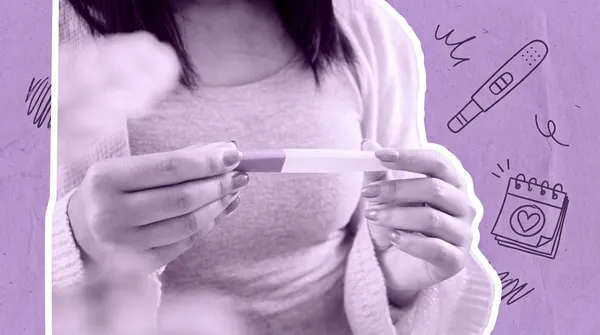
Whether you're trying to conceive or in the middle of a long fertility journey, buying pregnancy tests can feel like a catch-22. Do you go with the cheap ones so you can test freely, or do you spring for the expensive brand because surely it must be more accurate? Here’s the thing: it doesn't actually matter. A dollar store pregnancy test works just as well as the one in the fancy pink box.
The short answer: dollar store pregnancy tests are just as accurate
Every pregnancy test sold in the United States is regulated by the FDA, regardless of price point. That means the $1 test sitting on the shelf at Dollar Tree has to meet the same federal accuracy standards as the $15 digital test that connects to a Bluetooth app. They all detect the same hormone — human chorionic gonadotropin, or hCG — using the same basic immunoassay technology. When used correctly, they're all around 99% accurate.
The difference between a dollar store test and its pricier counterpart isn't accuracy. It's packaging, marketing, brand recognition, and digital displays. That little screen that spells out "Pregnant" instead of showing two lines? That's what you're paying for. Not better science.
Why cheap pregnancy tests work (and why we're told they don't)
All pregnancy tests, from the most basic strip to the fanciest digital gadget, work by detecting hCG in your urine. When a fertilized egg implants in the uterine lining, your body starts producing hCG, and levels roughly double every 48 to 72 hours in early pregnancy. The test strip contains antibodies that react to hCG, producing a visible line (or a digital readout) when the hormone is present above a certain threshold.
Here's something most people don't realize: dollar store tests are often manufactured by the same companies that produce name-brand tests. The formulas are virtually identical. If you want to verify that a specific brand is FDA-cleared, you can search it directly in the FDA's 510(k) database.
The myth that "cheap equals unreliable" serves expensive brands, not consumers. What you're NOT paying for with a dollar store test: glossy packaging, celebrity endorsements, digital screens, companion apps, and the warm fuzzy feeling of brand recognition. What you ARE getting: the exact same science.
In a Rescripted survey of ~1,000 community members, one-third had no preferred pregnancy test brand at all, suggesting that a significant number of people already know that the brand on the box doesn't determine the result.
Let's talk about the financial reality of TTC
Anyone who's been through the two-week wait knows the drill. You tell yourself you'll wait until your missed period to test. Then 8 DPO rolls around, and suddenly you're analyzing every twinge, every wave of nausea, every time you feel slightly more tired than usual. Before you know it, you're testing daily (or twice daily, no judgment).
At $10 to $15 per test, that habit adds up fast. An anxious tester could easily spend $150 or more per cycle on pregnancy tests alone. Multiply that by months or even years of trying, and the costs become staggering, especially when you layer on the expenses many people are already managing: fertility treatments, IUI or IVF cycles, medications, monitoring appointments, and copays.
Dollar store tests remove the financial anxiety from early testing entirely. You can test to your heart's content without doing mental math about whether you're "wasting money." The emotional toll of TTC is heavy enough without adding guilt about spending too much on tests.
Who bears the burden of expensive testing?
The cost of pregnancy tests isn't equally felt. Low-income individuals and BIPOC communities, who already face disproportionate barriers to reproductive healthcare, are hit hardest by inflated test prices. Early pregnancy confirmation matters: it affects when someone can start prenatal care, make informed decisions, and access resources.
Financial status has nothing to do with someone's worthiness to become a parent, and access to affordable testing is a matter of reproductive health equity. Stockpiling dollar store tests helps level a playing field that shouldn't be uneven in the first place.
The money thing is real (just ask Margo)
If you've been watching Margo's Got Money Troubles on Apple TV+, you know that navigating pregnancy on a budget is no joke. The show follows a young woman who gets pregnant unexpectedly and has to figure out how to afford, well, everything. While Margo's situation is fictional, the financial stress is incredibly real for many people.
Whether you're TTC, currently pregnant, or postpartum, every dollar counts. Stockpiling dollar store tests is one small but meaningful way to take control of costs when so much else feels expensive and overwhelming.
Where to get cheap pregnancy tests (and how to stock up)
Ready to build your stash? Here's where to look:
Dollar Tree, Dollar General, Family Dollar: Typically carry pregnancy tests for $1 to $1.25 each. Check expiration dates before buying, as dollar stores sometimes stock items closer to their expiration.
Bulk test strips online: Brands like Wondfo and Clinical Guard sell packs of 25 to 50 hCG test strips on Amazon for a fraction of what you'd spend on boxed tests at the drugstore.
Clinics and community health centers: Some Planned Parenthood locations and community clinics offer free pregnancy tests.
Pro tip: keep a stash at home so you're not making frantic midnight runs to the drugstore. Having tests on hand takes the urgency (and the impulse spending) out of the equation.
When dollar store tests might give false negatives (it's not about quality)
If you get a negative result on a dollar store test, it doesn't mean the test failed. It almost always means one of these things happened:
You tested too early. hCG typically isn't detectable until about 12 to 14 days after ovulation. Testing at 8 DPO, no matter how tempting, often leads to a negative even if implantation occurred.
The detection threshold is slightly higher. Some budget tests detect hCG at 25 mIU/mL, while certain "early detection" brands claim sensitivity at 10 to 20 mIU/mL. This means an early result test might pick up a very early pregnancy a day or two sooner, but the dollar store test will catch up quickly as hCG rises.
Your urine was too diluted. Drinking a lot of water before testing can dilute hCG concentration below the detection threshold.
You tested later in the day. hCG is most concentrated in first morning urine.
For the most reliable result, test with first morning urine, ideally after your missed period. If you get a negative but still suspect pregnancy, test again in two to three days. Since hCG doubles roughly every 48 hours, a true pregnancy will produce a clear positive soon enough.
In a Rescripted community survey of ~1,500 women, 62.9% said they prioritize hCG sensitivity when purchasing pregnancy tests. That's a smart instinct, but it's worth knowing that the sensitivity gap between budget and premium tests is usually small and only matters in the very earliest days of pregnancy.
The psychology of "confirming" with an expensive test
You take a dollar store test, see two lines, and then immediately drive to the drugstore for a $15 digital test to "really" confirm it. Sound familiar?
This impulse makes total sense emotionally. After months (or years) of trying, you want certainty. You want the screen to literally spell it out. But from a scientific standpoint, there's nothing to confirm. A positive on a dollar store test means hCG was detected. That's it. The expensive test isn't going to tell you anything different.
Marketing has done an incredible job of convincing us that premium price tags equal premium reliability. But a line is a line, whether it shows up on a $1 strip or a $20 digital wand. Save that money for prenatal vitamins, your first OB appointment, or, honestly, a really good meal to celebrate.
Do cheap pregnancy tests work for everyone?
Yes, but knowing your body and cycle matters more than the brand of test you use. If you have irregular periods or PCOS, timing becomes trickier because pinpointing ovulation (and therefore when to test) is less straightforward. In these cases, it's not the test that's unreliable; it's the timing.
hCG levels also vary from person to person. Some people produce detectable levels earlier than others. Chemical pregnancies, which are very early pregnancy losses, might show a faint positive on any test before levels drop again. This isn't a flaw specific to cheap tests — it happens across every brand and price point.
The takeaway? Dollar store tests work the same for everyone. What matters is when you test, not what you use.
How to use dollar store pregnancy tests for best results
To get the most accurate result from any pregnancy test (cheap or otherwise), follow these guidelines:


Test first thing in the morning when hCG is most concentrated in your urine.
Avoid drinking large amounts of water before testing, as this dilutes hCG.
Read results within the specified time window, usually three to five minutes. Results after that window aren't reliable.
A faint line is still a positive. Any visible line, no matter how light, indicates hCG is present.
Keep the test flat on a surface while waiting for results.
Always check the expiration date before using.
Debunking the shame around "cheap" tests
There's zero scientific reason to spend more on pregnancy tests. None. The saying "you get what you pay for" simply doesn't apply when the FDA mandates the same accuracy standards across the board.
TTC communities online are filled with people who swear by dollar store tests, sharing photos of their faint lines and celebrating positives that cost them a buck. According to FDA guidance on over-the-counter hCG pregnancy tests, all cleared tests must demonstrate accuracy in detecting hCG at or above their stated sensitivity threshold, with results expressed in terms of percent accuracy. Real people get real results from cheap tests every single day.
Choosing affordable tests isn't cutting corners. It's being financially smart in a healthcare system that already asks too much of people's wallets. Reproductive healthcare shouldn't be a luxury good, and pregnancy confirmation shouldn't come with a premium price tag.
The bottom line: trust the dollar store test
FDA regulation means every pregnancy test on the shelf has to meet the same standards. Accuracy comes down to timing and following directions, not how much you spent. Stockpiling cheap tests removes one layer of financial stress from a process that's already emotionally and financially demanding.
You deserve access to pregnancy confirmation without guilt, without judgment, and without draining your bank account. A positive is a positive, whether it costs $1 or $15. Believe it.