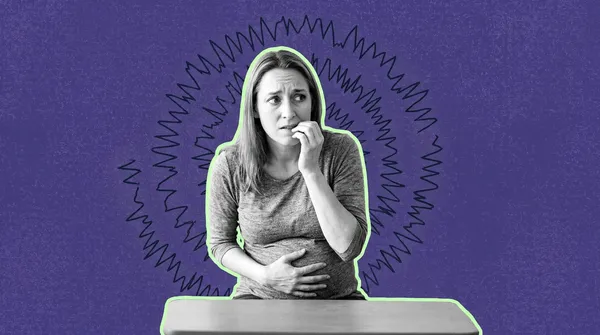
When you see pregnancy portrayed in movies and TV shows, it’s all glowing skin, nursery decorating, and serene moments. But behind closed doors, many expectant parents are experiencing a completely different reality: racing thoughts, a pounding chest, and a late-night Google search history filled with terrifying "what-if” scenarios.
If that sounds familiar, you’re not alone. Anxiety during pregnancy affects roughly 1 in 5 pregnant people. Despite how common it is, it remains confusing and shrouded in guilt. After all, shouldn’t this be a happy time in your life?
To break down what’s normal when navigating anxiety during pregnancy — and when to ask for help — we chatted with two licensed therapists for the 411.
Why does pregnancy cause anxiety?
“Pregnancy is one of the biggest changes a person can go through,” says Amy Morin, LCSW, Florida-based psychotherapist and author of The Mental Strength Playbook. “Not only is your body changing, but your entire life is about to change. Add in hormonal shifts, sleep issues, and a fair amount of uncertainty, and it’s clear that anxiety is a normal response.”
“Losing” your old life and making space for your new role as a parent may come with doubt and a great deal of uncertainty, especially if it’s your first pregnancy, adds Kara Lissy, LCSW, a psychotherapist based in the New York City area.
“Many women also feel concern about childcare and the idea of balancing motherhood with their career,” Lissy says. “Others have a preoccupation with the health of the fetus, especially with a history of miscarriage. A previous loss can make us hypervigilant to any potential threats for fear of going through that kind of pain again.”
The guilt loop nobody warns you about
When feelings of anxiety crop up during pregnancy, you may think to yourself something along the lines of: "I should be grateful for the ability to bring life into this world, so why do I feel this way?"
Feeling guilty about your anxiety then creates more anxiety, which creates more guilt, which creates more anxiety, and you may be trapped in this loop for longer than you’d like.
This guilt can convince you that your feelings are wrong or that your anxiety is proof that you’re not cut out to be a parent, Morin explains. But the reality is that you can feel gratitude and fear at the same time.
“Guilt is an emotion that we should save for when we made a mistake or did something we’re not proud of,” Lissy says. “Worrying about being a good [parent] or the health of your baby already makes you a caring parent.”
But it’s important to remember that anxiety is actually meant to be a “helpful” emotion, according to Lissy.
“Anxiety exists to protect us and make sure we are self-aware,” Lissy says. “We just have to make sure it doesn’t go into overdrive and cause more problems than it helps.”
If you’re stuck in a cycle of guilt over your anxiety, Morin suggests naming what's actually happening ("I'm anxious, and I feel guilty about being anxious") and remind yourself that anxiety isn’t evidence that you won’t be a good parent. It just means you’re aware that there’s a big change coming and this is important to you, she says.
Normal pregnancy worries vs. anxiety that needs attention
When you’re deep in a pit of anxiety, it can be hard to differentiate between normal pregnancy worries and anxiety that needs attention from a professional.
According to our experts, normal worries may look like:
General worry about the future: how you’ll afford everything, how you’ll survive on less sleep, or how you’ll get everything done.
Occasional concern about the health of the baby, especially with a new or uncomfortable pregnancy symptom
Occasional crying
Fear about childbirth, birth plan, pain management, and what to expect in delivery.
Anxiety that warrants a call to your therapist or doctor may look like:
Constant worry that gets in the way of daily functioning
Panic attacks
Inability to sleep
Low appetite
Low energy
Struggling to participate in normal day-to-day activities
Inability to focus on tasks
Social isolation
Avoiding prenatal care
Feelings of restlessness, muscle tension, irritability, racing thoughts, or dread.
“When anxiety is impairing your functioning at home, work, or in your relationships, it’s best to get a doctor involved,” Lissy says. “You can call your primary care doctor first to rule out anything medical, but be prepared for a psychiatric referral, too.”
If you’ve never had a panic attack before, you might not realize you’re having one. Panic attack symptoms can vary, according to Lissy, but often include a few of the following:
Racing heart
Chest pain
Dizziness
Shaking
Tingling in the arms or other parts of the body
Headache
Tension and rigidity in the neck and upper body
Clammy hands
Sweating
Feeling like you can’t catch your breath
“Many folks say they feel like they are having a heart attack when having a panic attack, especially the first time,” Lissy says.
If you’re having a panic attack, find a quiet space to sit or step outside to get some air, Morin suggests. Pay attention to what’s going on around you right now — what you can see, hear, smell, taste, or touch — and don’t try to do any deep breathing exercises, as that can make a panic attack worse, she says. And if you aren’t sure whether it’s a panic attack or a medical issue, contact your medical provider.
Natural remedies for anxiety during pregnancy
There are a few ways to ease your anxiety during pregnancy naturally, according to our experts.
“The basics matter more than people think,” Morin says. “Try to get consistent sleep, regular movement, and time outside. And limit how much pregnancy content you consume online if you’re tempted to doomscroll — watching the worst case scenarios or hearing about horror stories will keep your brain on high alert.”
Connection helps, too, Morin says. Talking to people who have experienced anxiety during pregnancy can remind you that you’re not alone.
A few more practical tips from Lissy:
Have a worry journal where you “dump” all of your worries and anxieties every night or as often as you’d like. When you’re feeling calmer, look back over them and categorize them into things you can control and things you can’t control.
Make a three-column to-do list: What needs to be done today, what needs to be done by the end of the week, and what needs to be done long-term.
How to calm anxiety during pregnancy right now
It helps to have some in-the-moment techniques in your back pocket when panic hits. Here are a few tried-and-true options from our experts:
Practice 4-7-8 breathing: Inhale for 4 counts, hold for 7 counts, exhale for 8 counts. The longer exhale slows your heart rate, and when your heart rate is calmer, your brain doesn’t have to stress to figure out what is wrong, Lissy says.
Dip your face in ice water: This activates the vagus nerve and sends blood flow to all the places your body needs it, according to Lissy. It also keeps your body temperature regulated.
Name what you're feeling: For instance, say "I'm scared something is wrong" instead of "I'm stressed,” Morin says. Labeling an emotion reduces its intensity almost immediately, she says.
Distract yourself: Get up and move, call someone, or do something that demands real attention if you’re thinking anxious thoughts, according to Morin. Changing what you’re thinking about and what you’re doing can shift your emotional state, she says.
Anxiety medication during pregnancy: what you need to know
Recently, there have been many fear-based, inaccurate, and harmful narratives circulating the internet and news outlets about taking medication during pregnancy, according to Lissy. Concern and worry are normal, but a reproductive psychiatrist certified in perinatal mental health (PMH-C) can answer your questions about medications, she explains.
“Many medications are quite safe throughout pregnancy or for the later part of pregnancy,” Lissy says. “A conversation with an established, practicing medical professional is the best source of advice. They have extensive experience studying, contributing to bodies of research, and treating patients.”
A medical expert who specializes in this can help you weigh the risks of treating your anxiety against the risks of not treating it, Morin adds.

If you do decide to take an anxiety medication during pregnancy, it’s important to stay hydrated, Lissy cautions.
“Medication effects can intensify during pregnancy, and even more so with dehydration,” Lissy says. “Keep a water bottle and electrolytes by your side at all times.”
Depression and anxiety during pregnancy often show up together
While depression and anxiety are separate, they often overlap. Symptoms of depression during pregnancy include the following, according to the National Institutes of Mental Health (NIMH):
Feeling sad, anxious, or “empty” almost daily for at least two weeks
Feeling hopeless, pessimistic, irritable, frustrated, guilty, worthless, or helpless
Losing interest in activities you once loved
Having little to no energy
Inability to sleep or sleeping too much
Having trouble remembering, focusing, or making decisions
Not being hungry
Thoughts of death or harming yourself
If you’re experiencing anxiety and depression during your pregnancy, it’s important to treat both for you and your baby’s health. Treatment usually includes medication, therapy, or a combination of both, according to the NIMH.
BetterHelp's Motherhood With You video series features licensed therapists and real moms talking through exactly this: the anxiety that lives underneath the pregnancy glow. Watch the series here.
Getting help: therapy, support, and what actually works
If you want to seek therapy for your anxiety but don’t know where to start, look for someone who specializes in perinatal mental health, Morin says. Your OB can usually refer you to someone they trust. Lissy also recommends browsing Postpartum Support International’s Perinatal Mental Health Provider Directory to find a licensed therapist in your area who specializes in treating mental health during pregnancy.
If you're looking for faster access to a licensed therapist who specializes in perinatal mental health, BetterHelp matches you with a provider online — and some providers on BetterHelp may be in-network with certain insurance plans, which matters when, according to BetterHelp's 2026 State of Stigma report, 52% of people cite cost as the reason they're not getting care.
Once you’re in therapy, you’ll likely explore where and when your distress first began, learn skills to challenge your negative thoughts, and set goals to work towards as you progress in your pregnancy, Lissy says.
“Some therapists take a more action-oriented approach involving homework and follow-up questions in between sessions, while others focus more on providing a safe space for you to explore your concern,” Lissy says. “Family history, when relevant, is sometimes taken into account, as it can be helpful to look at anxiety in the context of your family of origin.”
Therapy for anxiety doesn’t necessarily need to be long-term, Morin adds. It can give you tools to use in between sessions and to help you throughout your pregnancy and after delivery, she says.
If anxiety is getting in the way of enjoying this pregnancy or just making it harder, you don't have to wait until postpartum to get support. BetterHelp connects you with a licensed therapist who can specialize in perinatal mental health, may be in network with certain insurance plans, and can meet you wherever you are online — including right now. Get started.
Insurance coverage, cost, and provider availability may vary by plan.