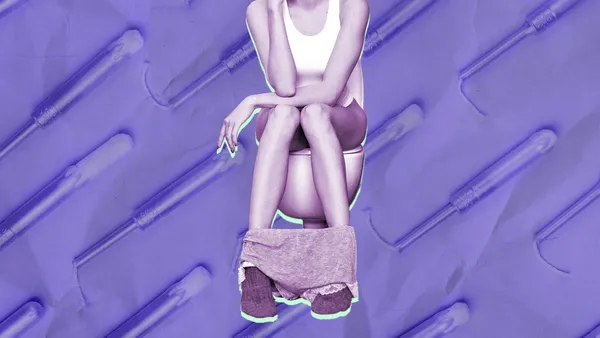
Unless you're part of the (apparently growing) population of women who have never used a tampon, having to take one out to poop is about as close to a universal experience of "girlhood" as it gets. And yet, somehow, this incredibly common scenario still feels like something you have to whisper-search on your phone in a bathroom stall.
The short answer: yes, but should you?
So let's clear this up right away: yes, you can physically poop with a tampon in. Your vagina and your anus are separate openings connected to entirely separate systems. The tampon sits in your vaginal canal, and your stool passes through your rectum and out your anus. Two different holes, two different jobs.
But just because you can doesn't always mean you should. Most gynecologists recommend removing your tampon before a bowel movement when possible, for reasons that have everything to do with bacteria and nothing to do with shame.
As a quick anatomy refresher, your urethra (where pee comes out), your vaginal opening, and your anus are all neighbors in a pretty compact space. They each have their own function and their own boundaries, but their proximity matters when we start talking about bacterial contamination. More on that in a minute.
Why your tampon keeps falling out when you poop
If you've ever sat down on the toilet, started to push, and felt your tampon making a slow escape, you're not imagining things. And nothing is wrong with your body.
Your pelvic floor muscles are multitaskers. They support your bladder, uterus, and rectum all at once. When you bear down to have a bowel movement, you engage many of the same muscles that are holding your tampon in place. That downward pressure can nudge the tampon lower in your vaginal canal or push it partially out.
This tends to happen more on lighter flow days, when there's less menstrual blood to help the tampon expand and grip the vaginal walls. A fully saturated tampon on a heavy day is more likely to stay put than a barely used one on day five of your period. It's just physics, not a pelvic floor problem.
The real risk: it's all about the string
The main concern gynecologists raise about pooping with a tampon in isn't about the tampon itself moving; it’s about the string.
Your tampon string hangs outside your body, dangling in the space between your vaginal opening and your anus. During a bowel movement, stool can come into contact with that string. And stool contains bacteria, most notably E. coli, that you absolutely do not want traveling toward your vaginal or urethral openings.
According to the Cleveland Clinic, E. coli bacteria from the gastrointestinal tract are responsible for the vast majority of urinary tract infections. The front-to-back wiping rule exists to keep fecal bacteria away from the urethra and vagina.
When bacteria from stool get on your tampon string, they have a direct wick right into your vaginal canal. This can increase your risk of:
Urinary tract infections (UTIs)
Bacterial vaginosis (BV)
Vaginal irritation or yeast infections
The risk isn't enormous from a single incident, but it's not zero. Watch for signs of infection like a fishy smell, burning during urination, unusual discharge, or itching. If any of these show up in the days after, it's worth a call to your doctor.
How to poop with a tampon in (if you really need to)
Sometimes, you just inserted a fresh tampon 30 seconds ago and nature calls. It happens. If removing and replacing isn't practical, here's how to minimize risk:
Wash your hands first. Always, but especially now.
Hold the string forward. Use one hand to pull the tampon string toward your belly button, keeping it as far from the action as possible.
Tuck it between your labia if you need both hands free.
Be meticulous when wiping. Front to back, every single time. Use a fresh piece of toilet paper for each wipe.
Inspect the string after. If there's any visible contamination, take the tampon out and replace it immediately. No debating.
This whole process is more manageable when you're just peeing versus pooping, since urine is sterile and the splash risk is much lower.
When you definitely need to take it out
There are certain situations where keeping the tampon in simply isn't worth the risk:
If you have diarrhea (watery stool dramatically increases contamination risk)
If the tampon has already been in for six or more hours
If you can't reliably keep the string out of the way
If the tampon is already starting to slip from the pressure
If your gut feeling says "this feels risky" — trust it
Are you supposed to change your tampon after pooping?
The conservative answer from most gynecologists is yes, change it every time.
The practical answer is, it depends.
If you literally just inserted a fresh tampon two minutes ago and barely have any flow to absorb, the frustration of pulling out a bone-dry tampon (ouch) is very real. On the other hand, if it's been in for several hours already, a bowel movement is actually perfect timing for a swap.
In a Rescripted survey of 300+ women, one-third said they change their tampon every 4-6 hours on average. If you're already within that window, just go ahead and change it. If you're well below that mark, use your judgment, but know that the safest move is always a fresh tampon.
Consider your flow, too. On a heavy day, the tampon is likely saturated enough that changing it is comfortable and easy. On a light day, removal can feel uncomfortable and wasteful. Factor in how many tampons you have with you and whether you'll have access to a bathroom again soon.
Period poops make this whole thing worse
If you feel like you need to poop way more during your period, you're not making it up. Prostaglandins, the hormone-like chemicals your uterus releases to trigger contractions and shed its lining, don't just stay in the uterus. They wander over to your bowels and stimulate contractions there, too. The connection between your menstrual cycle and your digestive system is more significant than most people realize.
According to a 2014 study published in BMC Women's Health surveying 156 menstruating women, 73% reported at least one gastrointestinal symptom before or during their period, with diarrhea and loose stools being among the most common complaints.
So now you've got a perfect storm: more frequent bowel movements (sometimes urgent ones), period diarrhea increasing contamination risk, and a tampon that needs to be dealt with every single time. The tampon timing struggle is genuinely exhausting when you're running to the bathroom every hour.
Some tips for managing both:
Time your tampon changes around your usual bathroom patterns
Keep extra tampons everywhere: your bag, your desk, your car
Consider switching to pads or period underwear on days when your digestion is especially unpredictable
Eat fiber-rich foods leading up to your period to promote more formed stools

Is it harder to poop with a tampon in?
For most people, no. A tampon shouldn't physically interfere with your ability to have a bowel movement. The vaginal canal and the rectum are separated by a thin wall of tissue, but a standard tampon isn't large enough to create a meaningful obstruction.
That said, some people report feeling more "full" or more aware of the tampon during a bowel movement. If it genuinely feels harder to go, you might be unconsciously clenching your pelvic floor. When you're stressed about the tampon situation (will it fall out? Is the string contaminated?), your muscles can tense up, making it harder to relax enough to poop.
Try taking a slow breath and consciously relaxing your pelvic floor. If difficulty pooping is a recurring issue — with or without a tampon — it might be worth mentioning to your doctor. Chronic constipation or pelvic floor dysfunction are treatable conditions that have nothing to do with your tampon and everything to do with getting you more comfortable.
The menstrual cup question nobody's answering
Everything we've discussed applies to menstrual cups too, with a few key differences. Cups sit higher in the vaginal canal and create suction, so they tend to stay in place better during bowel movements. No dramatic escape attempts.
However, many cups have a stem or tab at the base that can still come into contact with fecal bacteria during a bowel movement. The same front-to-back vigilance applies.
Some people find cups easier for this exact reason. They're more secure, there's no dangling string, and you don't need to replace them after every trip to the bathroom. Research has found menstrual cups to be a safe and effective method of menstrual hygiene, with no increased risk of infection compared to other products.
And if you want to sidestep the entire tampon-and-pooping dilemma, period underwear eliminates the problem entirely. No string, no stem, no removal necessary. It's not the right choice for every person or every day, but it's worth knowing the option exists.
What gynecologists actually recommend
The expert consensus (and the cleanest, safest approach) is to remove your tampon before you poop when possible and replace it with a fresh one after.
Beyond the poop-specific advice, the standard tampon guidelines still apply. Change your tampon every four to eight hours regardless of flow. Use the lowest absorbency that works for your flow. And while toxic shock syndrome (TSS) is rare, it's real. Don't give bacteria unnecessary opportunities by leaving tampons in longer than needed or reusing one that may have been contaminated.
The most practical thing you can do is to keep extras on hand. Stock your bathroom, your bag, your workplace drawer. When you always have a backup, the decision to swap becomes a lot less stressful.
Let's destigmatize this question
This question gets searched constantly, and yet most of us never got a straightforward answer in health class, from our parents, or even from our doctors. The gap in period education is real, and it leaves millions of women guessing about things that are genuinely practical health concerns.
Wondering whether you can poop with a tampon in isn't gross. It's a logistics question about managing your body, and it deserves a real answer. Now you have one. Do what works for you, stay informed about the risks, and never feel weird about asking the questions that actually matter in your daily life.