Preterm Birth Report Card: Why a D+ Isn’t Just a Grade
When I saw the news that the U.S. earned a D+ (again) for preterm births, my body reacted before my mind even caught up. The grade comes from the March of Dimes’ 2025 Report Card, which tracks maternal and infant health across the country each year. And even though my own brush with preterm labor happened back in 2018, there’s still a part of me that remembers exactly what it feels like when a pregnancy suddenly tilts from “routine” to “uncertain.”
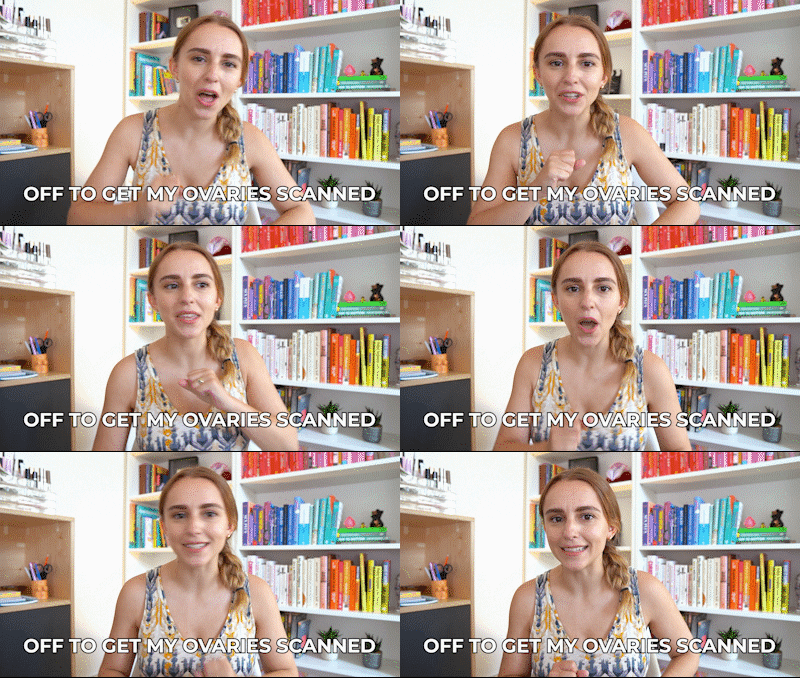
I was 27 weeks with my twins when a standard scan turned into an unexpected sprint to the hospital. One day my cervix looked perfectly normal; the next, it had shortened dramatically, and I was contracting every few minutes without realizing it. It’s such a surreal shift — going from thinking about your baby shower to being on bed rest, trying to steady yourself while everything around you changes.
So when I see that D+, it doesn’t land like a distant statistic. It hits in the place that remembers how fragile those moments are, and how deeply the quality of your care shapes what happens next. I was incredibly fortunate. I had a hospital close by, doctors who didn’t hesitate, and the privilege of hearing, “We’re keeping you here until it’s safe.” Not everyone gets that sentence. In fact, according to the March of Dimes, half of U.S. states received a D or an F, and more states saw their preterm birth rates worsen than improve.
And those disparities baked into the numbers? They’re not about biology. They’re about access, longstanding inequities, and the reality that some mothers are navigating pregnancy with far fewer supports than others. If a healthy pregnancy can unravel overnight, imagine facing that same fear without the safety nets so many of us assume will be there.
That’s why this grade matters. Not because it’s disappointing, but because it’s personal. It’s lived. It’s a reflection of the women who’ve been through it, the women who weren’t supported, and the women who still won’t be unless something drastically changes.


More from GIRLHOOD