Hashimoto’s Didn't Get the Progressive Overload Memo
The other day, I woke up, fed my three kids breakfast, took them to 9:45 mass, and then rushed the older two to a birthday party at a sports place. After being overstimulated by 30-plus kids for two hours, I came home and took a nap. That's pretty typical for me. I'm the energizer bunny... until I'm not.
The thing is, I actually love working out. But I recently came across a video from McCall McPherson that finally put words to something I've known for years: being active with Hashimoto's requires nuance. Progressive overload, the idea that you keep adding more weight, more reps, more intensity, is the default advice in every fitness app out there. And for most bodies, it works exactly like it's supposed to. For mine, it's a great way to feel amazing on Tuesday and flattened by Wednesday.
Hashimoto's is an autoimmune disease of the thyroid, and about 85% of the time, I don't think about it at all. But push too hard, and my body doesn't just get tired; it stages a full-on protest. Not soreness. Not the good kind of wrecked. More like crushing full-body fatigue that feels like first-trimester exhaustion, and then some.
There's a concept called spoon theory, where every task costs you a unit of energy, and once you're out, you're out, no matter how badly you want to keep going. I don't say it at dinner parties, but it's always in the back of my mind when I'm deciding whether today is a Pilates x Strength day or a "walk the dog around the block" day.
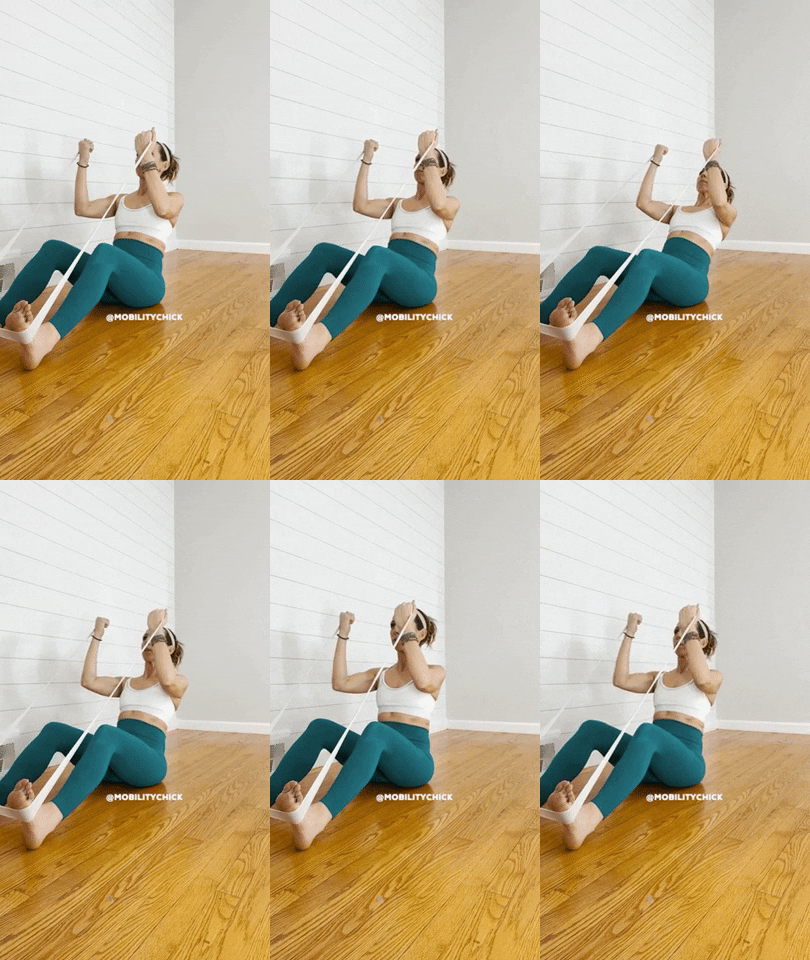
For me, what seems to work is a mix of Pilates and strength training, minus the heavy weights, with real rest days built in between. And walking, which somehow still doesn't feel like 'real' exercise even though it counts every single time.
I may never have a body like Hilary Duff, but at least I'll be able to take care of my kids without being on the brink of collapse, and that's a win.


More from GIRLHOOD