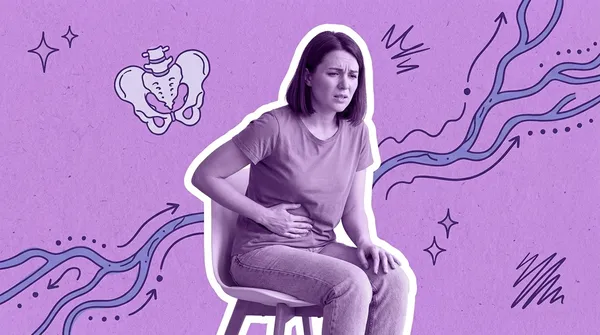
We all know someone (who knows someone) who has been living with chronic pelvic pain for years. It's no secret among female friends that you often get "it's probably just your period" or "try taking ibuprofen" in response to what feels like debilitating PMS symptoms — meanwhile, the pain keeps showing up, disrupting your daily life, affecting everything from work to parenting to intimacy.
But what if it really isn't your period, but rather something more elusive that most women have never even heard of?
When "it's just your period" doesn't cut it
Pelvic congestion syndrome (PCS) is one of the most underdiagnosed causes of chronic pelvic pain in women, and it’s estimated to account for up to 30% of all chronic pelvic pain cases. In simple terms, it's varicose veins in the pelvis. Just like varicose veins in the legs, the valves inside pelvic veins stop working properly, allowing blood to flow backward and pool instead of returning to the heart. That pooling causes the veins to swell, creating chronic pain and pressure.
PCS disproportionately affects premenopausal women, especially those who have been pregnant. And because its symptoms overlap with so many other conditions, it often gets missed or misdiagnosed for years.
This article covers everything you need to know: symptoms, causes, how it's diagnosed, treatment options, and the questions people are actually searching for, including whether PCS affects fertility, pregnancy, cancer risk, and more.
Pelvic congestion syndrome symptoms
The hallmark symptom of PCS is a dull, aching pelvic pain that lasts more than six months. Unlike menstrual cramps, this pain isn't tied to your cycle, although it can worsen around your period. It tends to get worse as the day goes on and can range from mildly annoying to genuinely debilitating.
Specific triggers that tend to worsen the pain include:
Prolonged standing or sitting
The days leading up to menstruation
During or after sexual intercourse (dyspareunia)
During or after pregnancy
Evening hours, after being upright all day
Other symptoms to be aware of:
Lower back and hip pain
Leg heaviness or visible varicose veins extending to the thighs or vulva
Abnormal uterine bleeding
Bladder urgency or irritability
Visible vulvar varicosities (swollen veins near the vulva)
Severity varies widely. Some women have mild discomfort they can manage around; others find it significantly limits daily function. And here's what makes PCS especially frustrating: its symptoms look a lot like endometriosis, IBS, and interstitial cystitis. That overlap is a big part of why it takes so long to get an accurate diagnosis.
In a Rescripted survey of over 300 women, 60% reported experiencing unexplained pelvic pain with vaginal intercourse, a symptom that's frequently dismissed but may point toward conditions like PCS.
Can pelvic congestion syndrome cause dizzy spells?
Potentially, yes. When blood pools in the pelvic veins, it can reduce the volume of blood returning to the heart. This may contribute to orthostatic symptoms like dizziness or lightheadedness, particularly when standing up. It's not a primary symptom of PCS, but it's a real one worth mentioning to your provider if you're experiencing it alongside pelvic pain.
Does pelvic congestion syndrome cause weight gain?
PCS doesn't directly cause weight gain, but the pelvic bloating, swelling, and pressure it creates can make you feel heavier or fuller in a way that mimics it. Chronic pain can also reduce your ability to exercise, which may secondarily affect weight over time. Some hormonal treatments used for PCS can also have weight-related side effects. If this is something you're noticing, it's absolutely worth bringing up with your provider rather than brushing aside.
What causes pelvic congestion syndrome
The underlying mechanism is straightforward: vein valves in the pelvis weaken and stop closing properly. Blood that should flow upward toward the heart flows backward instead, pooling in the veins and causing them to dilate and swell.
Several risk factors make this more likely:
Multiple pregnancies: Blood flow to the ovarian veins can increase up to 60-fold during pregnancy, and the resulting strain can permanently damage vein valves.
Hormonal influences: Estrogen widens veins, while progesterone impairs valve function, which is why PCS is far more common in premenopausal women.
Family history: A family history of varicose veins increases risk.
Polycystic ovary syndrome (PCOS): According to a review of pelvic venous congestion syndromes published in CVIR Endovascular, polycystic ovaries have been reported in up to 40% of women with pelvic venous insufficiency, suggesting a meaningful overlap between the two conditions.
Anatomy plays a role, too. The left ovarian vein drains into the renal vein at a steeper angle than the right, making left-sided PCS more common. PCS can be primary (caused by vein insufficiency itself) or secondary (caused by external compression of the veins, as in May-Thurner syndrome, where the left iliac vein is compressed by the overlying artery).
Is pelvic congestion syndrome serious?
PCS is not life-threatening, but it is a legitimate chronic pain condition that can significantly impact quality of life. Research shows it can interfere with work, exercise, sexual activity, travel, and even routine tasks that involve prolonged standing or sitting. If you've been wondering whether you can take a long flight, get through a shift on your feet, or run a 5K without flaring, those concerns are valid and worth discussing with a specialist.
Can you die from pelvic congestion syndrome?
Questions Women Are Asking
No. PCS itself is not fatal. While it causes real and sometimes significant pain, it is not associated with mortality. The one nuance: PCS has been linked to an increased risk of blood clots in some cases (more on that below), which is a complication to discuss with a provider rather than an immediate emergency.
Can pelvic congestion syndrome cause blood clots?
There is a connection. Blood that pools in dilated pelvic veins moves more slowly, which can increase clotting risk. According to a case review published in PMC examining May-Thurner syndrome and pelvic congestion syndrome, PCS has been linked to pelvic vein thrombosis in some patients, particularly those with co-existing conditions like May-Thurner syndrome. If you have additional clotting risk factors (hormonal birth control, a history of DVT, or a clotting disorder), raise this with your provider.
Pelvic congestion syndrome and ovarian cancer: what's the connection?
PCS does not cause cancer, and it is not a precursor to ovarian cancer. The question is completely understandable, though: pelvic pain, bloating, and vague abdominal symptoms overlap between the two conditions, which can naturally spark fear. A thorough diagnostic workup for PCS should include ruling out other causes of pelvic pain, including malignancy. If you have concerns, voice them. Getting clarity is always better than sitting with anxiety.
Pelvic congestion syndrome and endometriosis
These two conditions frequently co-occur and are often confused with each other. According to a study published in the Journal of Clinical Medicine examining women with chronic pelvic pain, PCS and endometriosis exhibit significant clinical overlap, and the frequent co-occurrence of these conditions requires a multimodal diagnostic approach to avoid diagnostic bias. Some evidence points to a bidirectional relationship: endometriosis-related inflammation may contribute to PCS development, and having one condition can worsen the symptoms of the other.
If you've been diagnosed with endometriosis but still have unresolved pelvic pain despite treatment, PCS is absolutely worth investigating as a contributing factor. Understanding the full range of endometriosis symptoms can also help you and your provider untangle which condition may be driving specific complaints.
PCS, fertility, and pregnancy: what you need to know
PCS alone is not typically considered a direct cause of infertility. However, some research suggests that pelvic venous congestion may be associated with reduced ovarian reserve and impaired uterine blood flow, which could affect fertility in some women. The relationship between pelvic venous congestion and uterine perfusion is an active area of investigation, and women with significant PCS symptoms who are trying to conceive are encouraged to discuss their full vascular and reproductive picture with a specialist. If you're trying to conceive and dealing with PCS symptoms, a conversation with a reproductive endocrinologist is a smart step.
Can you get pregnant with pelvic congestion syndrome?
Yes, most women with PCS can and do get pregnant. That said, pregnancy itself can worsen PCS symptoms due to increased blood volume, higher pelvic blood flow, and hormonal changes that further relax vein walls. Symptoms may persist for weeks or months postpartum. The good news: with the right provider team, including an OB who's aware of your PCS, this is very manageable.
Can pelvic congestion syndrome cause miscarriage?
The evidence here is limited and mixed. PCS is not established as a direct cause of miscarriage. Impaired pelvic blood flow and venous congestion are areas of ongoing research in relation to pregnancy complications, but there isn't currently strong evidence drawing a causal line. If you have PCS and are trying to conceive or are pregnant, working with both an OB and a vascular specialist — and advocating for thorough monitoring — is the best approach.
How is pelvic congestion syndrome diagnosed?
The diagnostic journey for PCS can be frustratingly long, in part because it's often a diagnosis of exclusion. Other causes of chronic pelvic pain need to be ruled out first.
Imaging options include:
Pelvic ultrasound with Doppler: Usually the first step. It can detect dilated veins and reversed blood flow in the pelvis.
CT scan or MRI: Provides more anatomical detail and helps identify vein compression or other structural causes.
Pelvic venography: The gold standard. A catheter is inserted into the veins to inject contrast dye and directly visualize blood flow. This is invasive and usually reserved for cases where other imaging is inconclusive.


If you've been dismissed, push for an imaging referral or seek a second opinion. You know your body, and persistent pelvic pain warrants investigation. If endometriosis is also on your radar, it's worth knowing how providers approach diagnosing it without surgery, since some of the same imaging tools overlap.
Who treats pelvic congestion syndrome?
PCS sits at the intersection of gynecology, interventional radiology, and vascular surgery, which is part of why it falls through the cracks. Your primary care provider or OB/GYN is often the first stop but may not be deeply familiar with PCS. A referral to an interventional radiologist or vascular specialist is often where diagnosis and effective treatment actually happen. The International Pelvic Pain Society (IPPS) can be a useful resource for finding specialists experienced in managing chronic pelvic pain conditions, including PCS.
Pelvic congestion syndrome treatment
There's no one-size-fits-all approach, but there are real options that work.
Medical and hormonal options
Hormonal therapies target the root drivers of vein dilation. Options include progestins, gonadotropin-releasing hormone (GnRH) analogues, and estrogen-blocking medications. These aim to reduce the hormonal signals that cause veins to dilate and worsen. Pain management with NSAIDs and other analgesics can help with day-to-day symptom relief. If PCOS is also present, treatment may overlap between the two conditions.
Procedures and surgery
Ovarian vein embolization is the most commonly performed minimally invasive procedure for PCS. A catheter is guided into the affected veins, where coils or a sclerosing agent block the faulty vessels and redirect blood flow to healthier veins. According to a review published in the Journal of Vascular and Interventional Radiology evaluating the etiology, diagnosis, and management of pelvic congestion syndrome, ovarian vein embolization demonstrates high technical success rates with significant symptom improvement in a majority of patients.
Sclerotherapy achieves a similar goal using a different technique. Surgical options like laparoscopy, rarely hysterectomy, or oophorectomy are typically reserved for severe, refractory cases. The important thing to know: treatment for PCS has advanced significantly. This is not a "just live with it" situation.
Pelvic congestion syndrome natural treatment
Lifestyle approaches can help manage symptoms alongside medical treatment. Consider elevating your legs when resting, avoiding prolonged standing or sitting, wearing compression garments (including compression shorts designed for pelvic support), and incorporating regular low-impact exercise like swimming or walking.
On the dietary side, foods to avoid with pelvic congestion syndrome include those that promote inflammation or strain the vascular system: heavily processed foods, high-sodium meals, and excess alcohol. An anti-inflammatory approach emphasizing omega-3 fatty acids, leafy greens, and antioxidant-rich foods may help support vascular health.
An important caveat: natural approaches can complement medical treatment, but they should not replace it, especially if symptoms are significant. Talk to your provider about building a plan that addresses the full picture.
Pelvic pain is not something to accept
If you've been told your pelvic pain is "just stress" or "just your period" for years, pelvic congestion syndrome might finally be the answer that makes sense. It's real, it's diagnosable, it's treatable, and you deserve a provider who takes it seriously.
If you recognized yourself in this article, consider bringing it to your next appointment. Ask about Doppler ultrasound. Push for a referral if needed. Your pain is not normal wear and tear, and you don't have to keep living around it.