Hot flashes and night sweats are among the most common (and frustrating) symptoms of menopause. They can show up as a sudden rush of heat, flushing skin, drenching sweat, and a pounding heart that makes it hard to relax, sleep, or focus. Nearly 50% of women in the U.S. going through menopause report moderate to severe hot flashes and night sweats, and for some, they can last for years.
If you’re navigating these symptoms, you are not alone, and you have more options than ever before to manage them. Let’s break down the causes of hot flashes, what may help, and how to feel more in control of your body during this phase of life.
Do all women get hot flashes and night sweats?
Not everyone going through menopause will experience hot flashes and night sweats, but they are among the most common symptoms women report. Studies estimate that about 60–80% of women in the U.S. experience hot flashes and night sweats at some point during the menopausal transition.
That also means some women don’t get them at all, which can feel unfair if you’re in the majority struggling with these sudden heat surges. Genetics, ethnicity, body weight, smoking status, and even cultural differences may all play a role in whether or not hot flashes show up, how severe they are, and how long they may last.
Hot flashes and night sweats can be more than just uncomfortable — they can interfere with daily life and mood. That’s why treatment options and supportive strategies matter so much.
Mild, moderate, or severe hot flashes: What’s the difference?
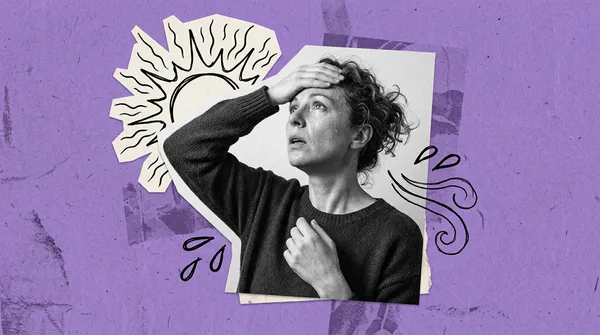
To take a step back, what is a hot flash? Hot flashes are characterized by a sudden, intense sensation of heat in the upper body, particularly the face, neck, and chest. Each hot flash episode typically lasts between 1 and 5 minutes and may be accompanied by perspiration, chills, anxiety, and occasionally, heart palpitations. A night sweat refers to a hot flash that occurs during sleep.
Hot flashes can vary in severity and are classified as mild, moderate, and severe. Understanding the difference between mild, moderate, and severe symptoms can help you feel more prepared to seek support and talk with your healthcare provider about your symptoms and potential treatment options.
A mild hot flash feels like a sensation of heat without sweating. You might notice it, but it doesn’t stop you from going about your day.
Moderate hot flashes tend to feel more intense, coming with sweating. Though uncomfortable, you’re likely still able to continue your normal activities and go about your day.
When hot flashes are severe, they can be particularly disruptive, like drenching clothing throughout your day or waking you up in the night.
For some people with moderate to severe hot flashes, the impact goes beyond physical discomfort and may affect mood, productivity, and relationships.
What’s the science behind menopausal hot flashes?
There are a few things going on at once during a hot flash caused by menopause. Your estrogen levels start to drop as your ovaries are no longer producing as much. The brain also plays a role and is impacted by the decline in estrogen. A brain chemical called neurokinin B (or NKB) is thrown out of balance due to declining estrogen levels. Normally, estrogen helps keep NKB balanced, but as estrogen levels drop, more NKB binds to receptors in the hypothalamus, the part of your brain that controls temperature (the thermoregulatory center). With this imbalance during menopause, it triggers hot flashes and night sweats.
The increased sensitivity of the thermoregulatory center means even a slight temperature change, like walking into a warm room or sipping coffee, can trigger a full-blown hot flash. It’s not “just in your head;” it’s a brain-body response to hormonal changes.
VEOZAH™ (fezolinetant) is the first FDA-approved treatment for moderate to severe hot flashes due to menopause designed to specifically block neurokinin B from binding to its receptor in the hypothalamus. VEOZAH is proven to reduce the number and severity of moderate to severe hot flashes day and night based on clinical studies measuring efficacy at 4 and 12 weeks. It can work as early as one week for some women. Every woman’s experience may be different, so it’s important for women to talk to their doctor about what this may mean for them. See below for Important Safety Information, including Boxed Warning.
VEOZAH can cause serious side effects, including Liver Problems. Your healthcare provider will do a blood test to check your liver before you start taking VEOZAH. Your healthcare provider will also do this blood test monthly for the first 3 months, at month 6, and month 9 after you start taking VEOZAH or if you have signs or symptoms that suggest liver problems. If your liver blood test values are elevated, your healthcare provider may advise you to stop treatment or request additional liver blood tests. Stop VEOZAH right away and call your healthcare provider if you have signs or symptoms of liver problems such as feeling more tired than usual, decreased appetite, nausea, vomiting, itching, yellowing of the eyes or skin, pale stool, dark urine, or stomach pain. Women should talk with their doctor and visit VEOZAH.com for more information about possible side effects. And, please see additional Important Safety Information below.
How long do hot flashes and night sweats due to menopause last?
The tricky part is that there’s no universal timeline for how long your hot flashes due to menopause may last. For some, they fade within a couple of years. For others, they can stretch on for seven to ten years, and sometimes even longer.
How long they last often depends on a mix of factors. The age at which menopause begins can play a role — experiencing it earlier sometimes means dealing with hot flashes for longer. Research also shows that ethnicity matters, with Black and Hispanic women often experiencing vasomotor symptoms for a longer duration compared to White and Asian women. Lifestyle and health factors like smoking and body weight can influence duration, too.
The good news? While the timeline isn’t fixed, there are treatment options that may help dial down the intensity and frequency of hot flashes and night sweats due to menopause.
How can you treat hot flashes and night sweats?
There’s no one-size-fits-all solution, but there are plenty of treatment options out there to explore. Finding what works starts with speaking to your doctor about what option may be right for you, and even trying different approaches to see how your body responds. Here are some potential options:
- Cognitive behavioral therapy: Cognitive behavioral therapy (CBT) may help you understand how your mind and body work together during hot flashes and night sweats. It can teach you what's happening physically, how your thoughts and emotions may make symptoms feel stronger, and ways to calm your body through relaxation, paced breathing, and trigger awareness.
- Clinical hypnosis: Clinical hypnosis is a mind-body approach that guides you into a deeply relaxed state, using personalized visualizations and suggestions to ease symptoms. This might include imagining cool sensations, creating distance from hot flashes, and focusing on calming, positive imagery for the future.
- Weight loss: Weight loss has been shown to reduce both the frequency and intensity of hot flashes.
- Explore medical options: Talk to your doctor. Prescription treatments — including hormone therapy for some, and non-hormonal options like VEOZAH for those who can’t, or choose not to, use hormones — may provide relief. Visit VEOZAH.com and talk to your healthcare provider to learn more about VEOZAH, including more information about possible side effects.
Hot flashes can be a common part of the menopause transition, but that doesn't mean you have to just put up with them. If they're interfering with your sleep or daily life, it may help to talk with a healthcare provider about what you're experiencing and explore ways to get relief.
Keeping your cool during menopause
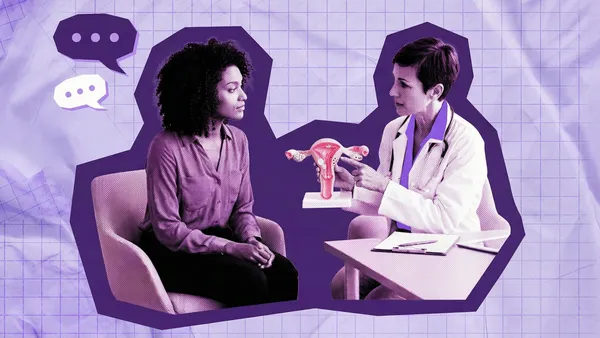
Menopause is a universal milestone for women in midlife, but the symptoms don’t look or feel the same for everyone. Hot flashes and night sweats can affect everything from work and sleep to relationships and mood, and it can be easy to feel like you’re the only one going through it.
But here’s the truth: whether through non-pharmacological options or prescription options like VEOZAH, there are real, science-backed treatments that may help you manage moderate to severe hot flashes or VMS.
To find more information about VEOZAH, including risks and benefits, and to help determine whether VEOZAH™ is the right treatment for you, talk to your doctor and visit VEOZAH.com.
INDICATION and IMPORTANT SAFETY INFORMATION
What is VEOZAH™ (fezolinetant)?
VEOZAH is a prescription medicine used to reduce moderate to severe vasomotor symptoms due to menopause. VEOZAH is not a hormone. Vasomotor symptoms are the feelings of warmth in the face, neck, and chest, or sudden intense feelings of heat and sweating (“hot flashes” or “hot flushes”).
IMPORTANT SAFETY INFORMATION
What is the most important information I should know about VEOZAH?
VEOZAH can cause serious side effects, including:
- Liver Problems.?Your healthcare provider will do a blood test to check your liver before you start taking VEOZAH. Your healthcare provider will also do this blood test monthly for the first 3 months, at month 6, and month 9 after you start taking VEOZAH or if you have signs or symptoms that suggest liver problems. If your liver blood test values are elevated, your healthcare provider may advise you to stop treatment or request additional liver blood tests.
Stop VEOZAH right away and call your healthcare provider if you have the following signs or symptoms of liver problems:
- feeling more tired than you do usually
- decreased appetite
- nausea
- vomiting
- itching
- yellowing of the eyes or skin (jaundice)
- pale feces
- dark urine
- pain in the stomach (abdomen)
Do not use VEOZAH if you:
- have cirrhosis.
- have severe kidney problems or kidney failure.
- are taking certain medicines called CYP1A2 inhibitors. Ask your healthcare provider if you are not sure.
Before you use VEOZAH, tell your healthcare provider about all of your medical conditions, including if you:
- have liver disease or problems.
- have kidney problems.
- have any medical conditions that may become worse while you are using VEOZAH.
Tell your healthcare provider about all the medicines you take,?including prescription and over-the-counter medicines, vitamins, and herbal supplements.
VEOZAH may affect the way other medicines work, and other medicines may affect how VEOZAH works.
The most common side effects of VEOZAH include:
- stomach (abdominal) pain
- diarrhea
- difficulty sleeping (insomnia)
- back pain
- hot flashes or hot flushes
These are not all the possible side effects of VEOZAH. Tell your healthcare provider if you have any side effect that bothers you or does not go away.
Call your healthcare provider for medical advice about side effects. You are encouraged to report negative side effects of prescription drugs to the FDA. Visit?www.fda.gov/medwatch?or call 1-800-FDA-1088.
Please see?full Prescribing Information?and?Patient Information, including BOXED WARNING.
References
- Williams RE, Kalilani L, DiBenedetti DB, Zhou X, Fehnel SE, Clark RV. Healthcare seeking and treatment for menopausal symptoms in the United States. Maturitas. 2007;58(4):348-358.
- English M, Stoykova B, Slota C, et al. Qualitative study: burden of menopause-associated vasomotor symptoms (VMS) and validation of PROMIS Sleep Disturbance and Sleep-Related Impairment measures for assessment of VMS impact on sleep [published online April 26, 2021]. J Patient Rep Outcomes. 2021. Erratum in: J Patient Rep Outcomes. 2021;5(1):42. Accessed April 10, 2024. https://jpro.springeropen.com/articles/10.1186/s41687-021-00289-y.
- Thurston RC. Vasomotor symptoms. In: Crandall CJ, Bachman GA, Faubion SS, et al, eds. Menopause Practice: A Clinician’s Guide. 6th ed. Pepper Pike, OH: The North American Menopause Society; 2019:43-55.
- Freeman EW, Sammel MD, Sanders RJ. Risk of long-term hot flashes after natural menopause: evidence from the Penn Ovarian Aging Study cohort. Menopause. 2014;21(9):924-932.
- The North American Menopause Society. The 2023 nonhormone therapy position statement of the North American Menopause Society. Menopause. 2023;30(6):573-590.
- Avis NE, Crawford SL, Greendale G, et al. Duration of Menopausal Vasomotor Symptoms Over the Menopause Transition. 2015;175(4):531-539.
- Jayasena CN, Comninos AN, Stefanopoulou E, et al. Neurokinin B administration induces hot flushes in women [published online February 16, 2015]. Sci Rep. 2015. Accessed January 30, 2024. https://www.ncbi.nlm.nih.gov/pmc/articles/PMC4329553/pdf/srep08466.pdf.
- Krajewski-Hall SJ, Miranda Dos Santos F, McMullen NT, Blackmore EM, Rance NE. Glutamatergic neurokinin 3 receptor neurons in the median preoptic nucleus modulate heat-defense pathways in female mice. Endocrinology. 2019;160(4):803-16.
- Veozah [package insert]. Northbrook, IL: Astellas Pharma US, Inc.
- Lederman S, Ottery FD, Cano A, et al. Fezolinetant for treatment of moderate-to-severe vasomotor symptoms associated with menopause (SKYLIGHT 1): a phase 3 randomised controlled study. Lancet. 2023;401(10382):1091-1102.
- Johnson KA, Martin N, Nappi RE, et al. Efficacy and safety of fezolinetant in moderate to severe vasomotor symptoms associated with menopause: a phase 3 RCT. J Clin Endocrinol Metab. 2023;108(8):1981-1997.
- Santoro NF. Menopause. In: Crandall CJ, Bachman GA, Faubion SS, et al, eds. Menopause Practice: A Clinician’s Guide. 6th ed. The North American Menopause Society; 2019:1-21.
MAT-US-VEO-2025-01079 12/25