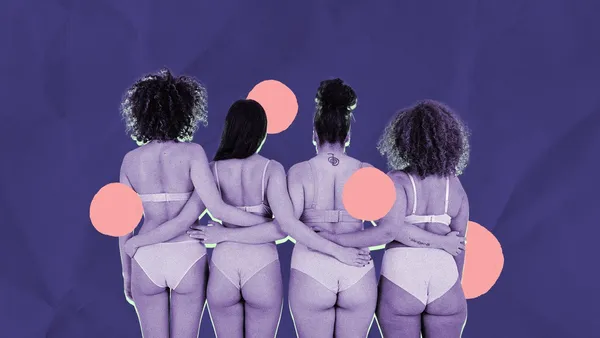
There's nothing quite like getting ready for a pool day, slipping into a swimsuit, and suddenly becoming hyper-aware of bumps on a body part that rarely sees the light of day. It's happened to me more times than I can count — the everything shower, freshly shaved legs, a week of workouts under my belt — and then a bathing suit exposes something I hadn't thought about until I'm standing on the beach in my cover-up, leaving it on.
Butt acne is one of those things that feels oddly isolating, even though it's incredibly common. A Rescripted survey found that among women who knew their breakout pattern, 44% experience cystic acne monthly or more, and only 16% never do. Add in the cyclical and stress-triggered group, and more than half of women are dealing with breakouts tied to some kind of recurring pattern. The butt is just one more place it can show up.
What causes butt acne
Here's the twist most people don't know: what gets called "butt acne" usually isn't acne at all. A 2018 retrospective study in the Journal of the American Academy of Dermatology found that more than 75% of Pityrosporum folliculitis patients had recently been treated with antibiotics for what was presumed to be acne vulgaris — meaning the condition was being misidentified and mistreated. True acne involves clogged pores (comedones), which are relatively rare on the buttocks since this area has fewer sebaceous glands than the face or chest. What most people are dealing with is folliculitis, inflammation of the hair follicles, typically caused by bacteria like Staphylococcus aureus or, in some cases, yeast.
So what's actually happening back there? Friction, sweat, and occlusive clothing create the perfect storm for irritated hair follicles. The buttocks spend a lot of time pressed against surfaces (office chairs, car seats, workout benches), and that constant pressure combined with heat and moisture is a recipe for inflammation.
Hormonal fluctuations can also worsen breakouts, particularly around menstrual cycles or for those managing conditions like PCOS. If hormones are a factor, understanding how hormonal acne works can help connect the dots.
Common causes of butt breakouts
Understanding the "why" makes the "how to fix it" a whole lot easier. Here are the most common culprits: Friction from exercise, sitting, or tight clothing. Repeated rubbing irritates hair follicles, leading to what dermatologists call "mechanical folliculitis." Sweat and bacteria trapped against the skin. Warm, moist environments are a playground for bacteria, and when sweat sits on skin it creates ideal conditions for bumps to form. Occlusive fabrics that don't breathe. Synthetic leggings and polyester underwear may look great, but they trap moisture against the skin far more than natural fibers. Not showering immediately after workouts. Lingering in sweaty clothes gives bacteria extra time to set up shop in irritated follicles. Shaving or waxing irritation. Hair removal causes micro-trauma to the skin, leading to ingrown hairs and inflamed follicles that look a lot like acne. Yeast overgrowth. Sometimes the culprit is fungal, not bacterial. Pityrosporum folliculitis, caused by an overgrowth of Malassezia yeast that naturally lives on skin, looks nearly identical to bacterial breakouts but won't respond to typical acne treatments.
What dermatologists say about butt acne
Board-certified dermatologist Dr. Abby (@drabby6) put it plainly in a TikTok that racked up over 10,000 likes: butt acne is usually folliculitis, blocked or infected hair follicles, and treating it like face acne won't work. Her recommendation: antimicrobial washes, hypochlorous acid spray, and exfoliating acids like salicylic and glycolic acid to reduce bacteria and lower the skin's pH. It's good advice, and it tracks with the clinical literature.
The broader "DermTok" moment is also worth noting. According to Dermatology Times, dermatologists are increasingly showing up on social media because patients are going there before Google, and the quality of advice varies wildly depending on who's posting. The AAD launched a "Your Dermatologist Knows" initiative specifically to help people tell the difference between board-certified physicians and dermfluencers. When a derm with actual credentials weighs in on something as common as butt folliculitis, it matters — because a lot of the comment-section remedies (Dial Gold soap, anti-dandruff shampoo as a body wash) are things people are genuinely trying, with mixed results.
Butt acne treatment: what actually works
Clearing up butt breakouts doesn't require a complicated routine, but it does require the right products and some patience. The most accessible first step: a benzoyl peroxide wash — it targets bacteria directly, costs under $15, and has the strongest clinical evidence behind it of anything on this list. Avoid over-scrubbing with harsh loofahs or gritty scrubs, which can worsen irritation by further damaging hair follicles.
Chemical exfoliants are the real heroes for the next layer. Salicylic acid (a beta-hydroxy acid) penetrates pores to dissolve debris, while glycolic acid (an alpha-hydroxy acid) works on the skin's surface to slough off dead cells. The 2024 AAD guidelines for acne management, published in the Journal of the American Academy of Dermatology, include salicylic acid as a conditional recommendation in the topical treatment toolkit.
Retinoids, available both over the counter (adapalene) and by prescription, can also help by accelerating cell turnover and preventing clogged follicles.
The biggest thing to remember? Consistency matters. Results from topical treatments typically take four to six weeks minimum. And as tempting as it is, don't pick or pop. That can lead to scarring, spreading bacteria, and a much longer recovery.
Benzoyl peroxide for butt acne
Benzoyl peroxide is one of the most effective over-the-counter options because it directly kills the bacteria responsible for inflamed bumps. The 2024 AAD acne guidelines make a strong recommendation for topical benzoyl peroxide as a first-line treatment, citing its antimicrobial properties and low risk of bacterial resistance.
Questions Women Are Asking
Start with a 2.5% to 5% concentration to avoid unnecessary irritation — higher percentages aren't always more effective but are more likely to cause dryness. It works well as a wash (apply, let sit one to two minutes, then rinse) or a leave-on spot treatment.
One practical heads-up: Benzoyl peroxide can bleach fabrics. Wear old underwear when using it and rinse thoroughly in the shower. The Mayo Clinic's guidance on folliculitis specifically recommends washing affected areas at least twice daily with an antibacterial cleanser like benzoyl peroxide.
Antibacterial soap for butt acne: yes or no?
After a sweaty workout, an antibacterial wash can help reduce bacterial load on the skin. But making it an everyday staple can backfire. Regular use of harsh antibacterial soaps disrupts the skin's microbiome, the balanced community of bacteria that actually protects skin from infection, leading to dryness, irritation, and paradoxically more breakouts.
Better daily alternatives include a benzoyl peroxide wash (which targets acne-specific bacteria without broad-spectrum disruption) or a salicylic acid cleanser that keeps follicles clear. Save the antibacterial soap for occasional heavy-sweat situations, not daily use.
Butt acne creams worth your money
When shopping for body-specific breakout treatments, ingredients matter more than branding. Look for products containing: Salicylic acid (0.5–2%): Clears clogged follicles and reduces inflammation Benzoyl peroxide (2.5–5%): Kills bacteria and prevents new breakouts Alpha-hydroxy acids like glycolic or lactic acid: Exfoliate surface dead skin and improve texture Niacinamide: A form of vitamin B3 that calms inflammation and strengthens the skin barrier For spot treatments, apply a thin layer of benzoyl peroxide or salicylic acid directly on individual bumps. For overall prevention, a body lotion with niacinamide or lactic acid applied after showering keeps skin smooth. Avoid thick, heavy creams or body butters on breakout-prone areas, as these can further occlude pores.
How to get rid of butt acne scars
Most "scars" from butt acne are actually post-inflammatory hyperpigmentation (PIH) — flat, discolored spots where inflammation used to be. A review published in the Journal of Clinical and Aesthetic Dermatology found that dyschromias including PIH are among the most common reasons people with darker skin tones seek dermatologic care, though it can affect any skin tone.

Prevention is the most important first step: don't pick, squeeze, or pop breakouts, because trauma to the skin dramatically increases the risk of lasting discoloration. Beyond that, here's what helps: Exfoliating acids: Glycolic and lactic acid promote cell turnover to gradually fade dark spots Vitamin C serums: L-ascorbic acid inhibits melanin production, brightening hyperpigmentation over time Retinoids: Over-the-counter adapalene or prescription tretinoin speeds up shedding of pigmented cells Professional treatments: Chemical peels and certain laser therapies work for stubborn marks that don't respond to at-home care Set realistic expectations: post-inflammatory hyperpigmentation can take three to six months to noticeably fade, and deeper marks may take longer.
Why you should resist popping butt pimples
Popping butt breakouts is actually riskier than popping facial pimples. The buttocks are constantly in contact with bacteria-harboring surfaces and experience more friction throughout the day. Squeezing a bump introduces more bacteria into an already irritated follicle, turning a minor annoyance into a potential infection and dramatically increasing the risk of lasting hyperpigmentation.
Instead, apply a warm compress for 10 to 15 minutes several times a day to encourage natural drainage. A benzoyl peroxide spot treatment can help kill bacteria. For deep, painful cysts that don't resolve within a week or two, a dermatologist can perform a safe extraction or cortisone injection to reduce inflammation quickly.
Prevention tips for butt acne
Shower immediately after sweating, whether it's the gym, hot yoga, or a long summer walk. Choose breathable, moisture-wicking fabrics. Cotton underwear and performance fabrics pull moisture away from skin far better than synthetics. Never sit around in damp workout clothes. Change as soon as the workout is done. Change underwear daily (seems obvious, but worth saying). Keep body wipes handy for days when an immediate shower isn't possible. Exfoliate two to three times per week with a chemical exfoliant, but don't overdo it, as daily exfoliation can irritate skin. Sleep commando or in breathable cotton to give skin a break overnight. For those managing PCOS-related skin problems, these prevention habits can be especially helpful as part of a broader skin-care strategy.
When to see a dermatologist
Home treatments work well for mild to moderate butt breakouts, but there are clear signals it's time to call in a professional: Breakouts aren't improving after six to eight weeks of consistent over-the-counter treatment Painful cysts or deep nodules that don't respond to warm compresses Widespread breakouts or sudden worsening of symptoms Signs of infection: increasing warmth, extreme redness, swelling, or pus Suspicion of a fungal infection — breakouts that are uniformly sized, intensely itchy, and unresponsive to benzoyl peroxide may be pityrosporum folliculitis A dermatologist can prescribe stronger treatments, including topical or oral antibiotics, prescription-strength retinoids, or antifungal medications if yeast is the underlying cause. They can also perform safe extractions and recommend professional treatments like chemical peels for stubborn scarring.
Butt acne (or more accurately, butt folliculitis) is far more common than anyone talks about. It's not a hygiene problem, it's not something to be embarrassed about, and it's very treatable. Give your routine at least a month, advocate for professional help when home care isn't cutting it, and remember: every part of your body deserves attention and care, even the parts you keep covered at the beach.